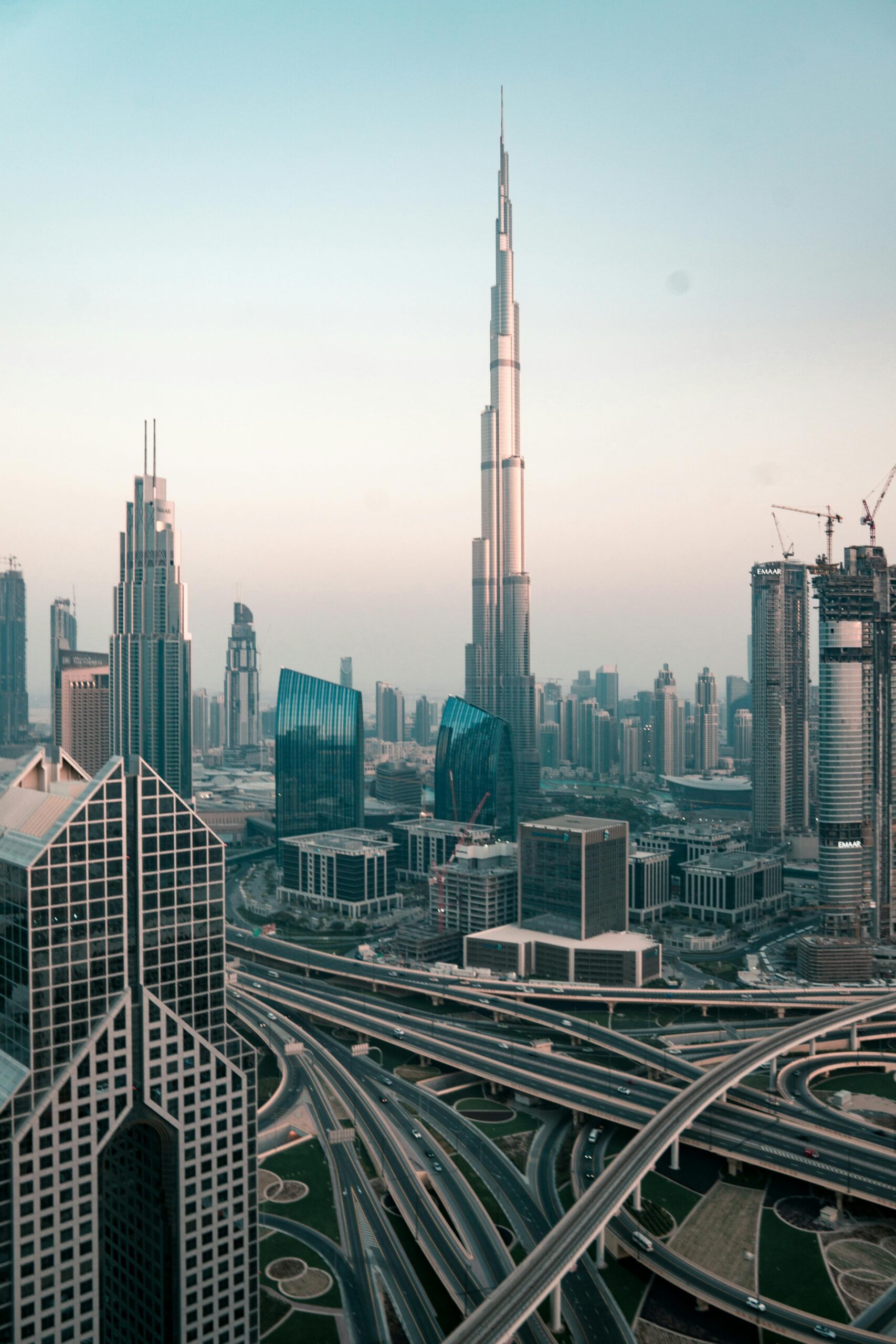
The United Arab Emirates, a nation synonymous with audacious development and futuristic visions, is once again setting the pace for infrastructure evolution. As its population swells and economic activity intensifies, the familiar ribbons of asphalt – the E11, E311, and E611 – are feeling the strain. Imagine a daily commute where over 850,000 vehicles vie for space, leading to frustrating delays and lost productivity. This challenge, however, is being met with an equally ambitious solution: the UAE Fourth National Highway and a colossal Dh170-billion (approx. $46.3 billion) transport investment programme.
This isn’t just about adding more lanes; it’s about engineering the future of mobility. It’s a strategic move to unlock greater connectivity, boost economic growth, and ensure the UAE remains a seamless, sustainable, and highly livable nation for decades to come. For residents, businesses, and investors, understanding this monumental undertaking is key to grasping the future trajectory of the Emirates.
What is the UAE Fourth National Highway?
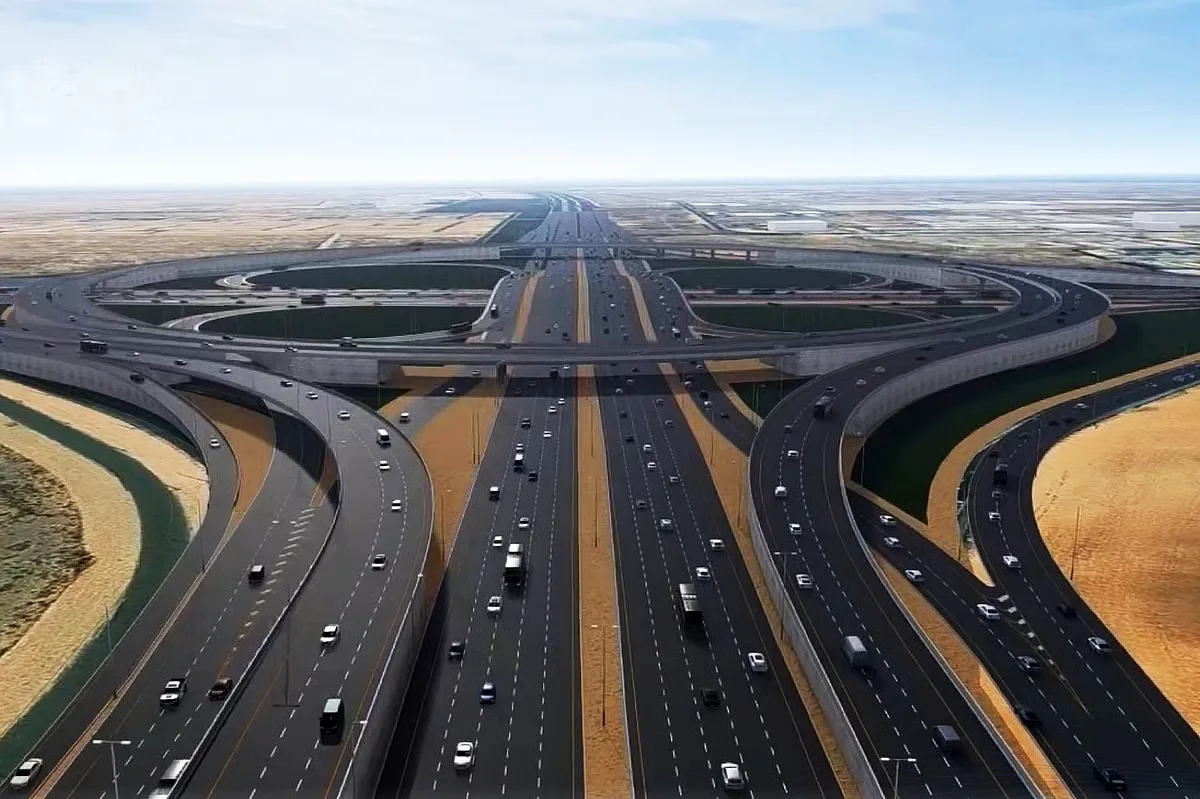
The UAE Fourth National Highway is the cornerstone of a comprehensive, multi-billion dirham strategy aimed at revolutionizing the nation’s transport infrastructure. While still in its feasibility study phase, this project envisions a new 120-kilometer federal motorway, designed as a 12-lane mega-corridor (six in each direction).
The primary objective of this new arterial route is to create an entirely new transport corridor that significantly eases the severe peak-hour congestion currently experienced between major hubs like Dubai and the Northern Emirates. It will serve as a vital new artery, connecting the intricate network of existing federal highways and designed to handle an astonishing 360,000 trips daily. This development is part of a broader national plan to enhance the overall efficiency of the federal road network by a remarkable 73% over the next five years.
Why the UAE Fourth National Highway Matters: Beyond Just Roads
The development of the UAE Fourth National Highway is more than a civil engineering project; it’s a critical investment in the nation’s future, addressing immediate challenges while laying groundwork for long-term prosperity.
It matters because traffic pressures are immense. The current network, though world-class, carries over 850,000 vehicles daily, leading to significant delays and economic costs. Residents are losing an estimated 1,000 hours annually to congestion. Furthermore, the UAE’s population is projected to reach 11 million by mid-2025, with vehicle ownership rising over 8% annually – far surpassing the global average of 2%. This growth necessitates proactive measures.
This highway, alongside the broader Dh170-billion investment, is crucial for maintaining the UAE’s competitive edge. Enhanced connectivity and reduced travel times boost logistics, trade, and tourism. It supports businesses by making inter-emirate commerce more efficient and improves the quality of life for residents by cutting down commute times. Ultimately, this strategic vision aligns with the ambitious UAE Centennial 2071 plan, aiming for a smart, flexible, and sustainable infrastructure that supports a thriving society.
The Dh170-Billion Transport Investment and National Growth Drivers
The UAE Fourth National Highway is the shining jewel in a much larger crown: the Dh170-billion Transport Investment Programme. This colossal investment, announced by Minister of Energy and Infrastructure, Suhail Al Mazrouei, during the UAE Government Annual Meetings, signifies a holistic approach to mobility.
The core drivers behind this massive infrastructure expansion are clear. Firstly, the escalating traffic pressure is undeniable. The sheer volume of vehicles on existing routes, especially between Dubai and the Northern Emirates, has necessitated new corridors to alleviate severe peak-hour congestion. Secondly, the nation’s surging population and the continuous rise in vehicle ownership demand proactive planning. This investment isn’t just reactive; it’s a forward-looking strategy to prepare for future growth and ensure seamless movement. It reflects a commitment to developing a smart, flexible, and sustainable network that supports the UAE’s long-term vision.
Specifications and Strategic Integration of the New Corridor
The planned UAE Fourth National Highway will be a game-changer. At 120 kilometers in length and featuring 12 lanes (six in each direction), it’s designed to be a high-capacity artery. Its strategic location and design will specifically target the intense traffic flow between Dubai and the Northern Emirates, offering a much-needed alternative to the heavily utilized existing routes.
This new corridor will seamlessly integrate with the UAE’s three existing federal highways: the E11 (Etihad Road/Al Ittihad), E311 (Sheikh Mohammed bin Zayed Road), and E611 (Emirates Road). It’s not about isolating traffic; it’s about intelligently distributing the load across a more robust and interconnected network. While the feasibility study is ongoing, the clear direction is to build an efficient, high-capacity road that complements the current infrastructure rather than merely running parallel to it.
Major Capacity Expansion for Existing Highways
The Dh170-billion program isn’t solely focused on the UAE Fourth National Highway. A significant portion of the investment is dedicated to dramatically upgrading and expanding the three existing federal highways, aiming to boost the total number of lanes from 19 to 33 in each direction across the network.
- E11 Etihad Road: This vital artery is set for a substantial expansion by six new lanes (three in each direction), which will boost its capacity by a remarkable 60%, bringing it to a total of 12 lanes. This will dramatically improve flow on one of the busiest roads.
- E611 Emirates Road: This highway is undergoing widening to 10 lanes along its full length. This expansion is projected to increase its capacity by 65% and, crucially, reduce travel time by 45%. Significant upgrade work on the E611 is already underway, representing an estimated Dh750 million investment, with completion expected within two years.
- E311 Sheikh Mohammed bin Zayed Road: This key route will also see widening to 10 lanes, enhancing its capacity by 45%.
These concurrent upgrades, requiring robust Federal–Local Coordination between the Ministry of Energy and Infrastructure and various local entities, are essential to ensure a harmonized and highly efficient national road network. They are integral to the UAE Highway Investment 2030 Strategy.
The Shift Towards Smart and Multimodal Mobility
The UAE’s transport vision extends far beyond just asphalt. It embraces a future of smart and multimodal mobility, integrating rail and advanced technology.
The Etihad Rail network plays a pivotal role here. As part of the broader Dh50 billion UAE Railway Programme, its passenger services are scheduled to begin in 2026. This national rail network will significantly strengthen connectivity between cities and communities, offering a sustainable alternative to road travel and directly contributing to reduced road congestion. It’s a testament to the UAE’s commitment to diversified transport options.
Furthermore, the integration of smart systems is paramount. The establishment of a 24/7 Integrated Traffic Monitoring Centre will leverage data and technology to analyze congestion in real-time and propose dynamic, data-driven solutions. This technological approach underscores the focus on policy improvement, safety, and a significant emphasis on emission reduction, working towards a truly sustainable road network that aligns with global environmental goals.
Expert Insight: A Visionary Investment
“The UAE’s proactive approach to infrastructure, particularly with the Dh170-billion transport plan and the proposed UAE Fourth National Highway, is a masterclass in visionary urban planning,” states Dr. Aisha Al-Mansoori, a leading urban development specialist. “They’re not just reacting to current traffic; they’re anticipating decades of growth, fostering economic resilience, and enhancing the quality of life for residents. The integration of rail and smart technologies, alongside massive road upgrades, indicates a truly holistic and future-proof strategy. This level of investment and foresight positions the UAE as a global leader in sustainable and efficient mobility.”
This level of strategic thinking, backed by substantial investment, ensures that the UAE remains ahead of the curve, providing seamless connectivity for its growing population and dynamic economy.
Conclusion: Paving the Way for a Connected Future
The UAE Fourth National Highway, alongside the broader Dh170-billion transport investment program, represents a defining moment in the nation’s journey. It’s a powerful statement of intent: to mitigate current traffic challenges, accommodate future growth, and solidify the UAE’s position as a hub of innovation and connectivity.
From significantly expanding existing arteries to forging new paths and integrating cutting-edge smart systems and rail networks, the UAE is building a mobility ecosystem designed for the 21st century and beyond. This monumental effort will ensure smoother commutes, enhanced trade, and a more sustainable future for everyone who calls the Emirates home. Keep an eye on this space; the roads of tomorrow are being built today.