The places we live, work, and play are no longer just structures of brick and mortar; they are becoming proactive tools for health and longevity. From air quality to lighting, and community design to natural materials, the focus of real estate has fundamentally shifted.
Welcome to the Wellness Real Estate Market—a sector that has surged from a niche luxury concept to one of the fastest-growing investment opportunities globally. This comprehensive guide breaks down the market, its massive growth potential, and the strategic advantages for investors and developers who build for well-being.
What is the Wellness Real Estate Market?
The Wellness Real Estate Market encompasses properties—both residential and commercial—that are purposefully designed, built, and managed to support the holistic health of their occupants.
It is the powerful intersection of the $6.3 trillion Global Wellness Economy and the real estate industry, moving beyond simple amenities to focus on core infrastructure, environmental quality, and social connection.
Why the Topic Matters: The Health-Wealth Connection
For decades, the built environment has been a hidden health adversary. Poor indoor air quality, lack of natural light, and isolation contribute to stress, disease, and poor productivity.
Wellness Real Estate addresses this by transforming buildings into regenerative spaces. Its importance is underscored by stark, recent statistics:
- Massive Market Growth: The global Wellness Real Estate Market reached $584 billion in 2024.
- Rapid Expansion: It is projected to double to $1.1 trillion by 2029, accelerating at an estimated Compound Annual Growth Rate (CAGR) of 15.2%. This growth rate is nearly three times faster than overall global construction growth (approx. 5.5%).
- Consumer Demand: Buyers and renters now see health-supportive environments as a non-negotiable standard, not a luxury perk.
The market is no longer about adding a gym; it’s about embedding well-being into the very DNA of the property.
Why the Wellness Real Estate Market is Exploding
The rapid growth of the Wellness Real Estate Market is fueled by several powerful, interconnected drivers that reflect a fundamental shift in global priorities.
1. The Post-Pandemic Health Imperative
The global health crisis served as an undeniable stress test for traditional homes and offices. When forced indoors, issues like poor ventilation, lack of natural light, and material toxicity became impossible to ignore. Health moved from a lifestyle pursuit to a non-negotiable survival priority. This experience has changed buyer priorities forever.
2. Integration of Preventative Healthcare and Urban Planning
There is a growing, evidence-based understanding that up to 80–90% of our health outcomes depend on environmental and lifestyle factors, not just genetics. Developers are stepping in to provide environments that act as preventative health systems.
- Example: Communities like Rancho Mission Viejo in California, designed around social architecture and extensive green space, report a 45% stronger social connection among residents compared to conventional neighborhoods, directly combating the loneliness epidemic.
3. The Wellness Premium: Higher Values and Rents
The most compelling driver for investors is the robust financial performance of certified wellness properties.
Data Insight: Residential properties with comprehensive wellness features consistently command a price premium of 10% to 25% over comparable conventional homes. Commercial spaces also see rental premiums, often in the range of 4.4% to 7.7%.
This “Wellness Premium” is a direct reflection of tenant willingness to pay more for environments that demonstrably improve their quality of life, reduce stress, and potentially lower long-term healthcare costs.
Current Trends & Key Features Defining the Market
The leaders in the Wellness Real Estate Market are moving beyond standard luxury amenities and focusing on fundamental design principles that ensure occupants thrive across physical, mental, and social dimensions.
Foundational Environmental Quality
Wellness design starts with the invisible, yet critical, infrastructure that creates a healthy indoor environment:
- Superior Air Quality: Installation of HEPA filtration and multi-stage air purification systems that actively screen particulates, allergens, and Volatile Organic Compounds (VOCs).
- Water Purity: Advanced multi-stage water filtration systems (e.g., carbon, UV) for all tap water, providing purity beyond municipal standards.
- Acoustic Management: Use of sound-dampening materials and strategic design to reduce noise pollution, enhancing deep sleep quality and concentration.
Biophilic Design and Neuro-Architecture
This trend focuses on connecting people to nature within the built environment, a principle known as biophilia.
- Nature Integration: Incorporation of natural elements like wood, stone, and extensive greenery (living walls, indoor gardens). This connection has been shown to reduce resident stress hormone levels (cortisol) by nearly 50% in some certified communities.
- Circadian Lighting: Automated, dynamic lighting systems that mimic the sun’s natural cycle, regulating the body’s internal clock (circadian rhythm) to improve sleep and alertness.
The Shift to Multidimensional Wellness
Wellness Real Estate is now embracing a much more holistic concept of health, tackling non-physical aspects:
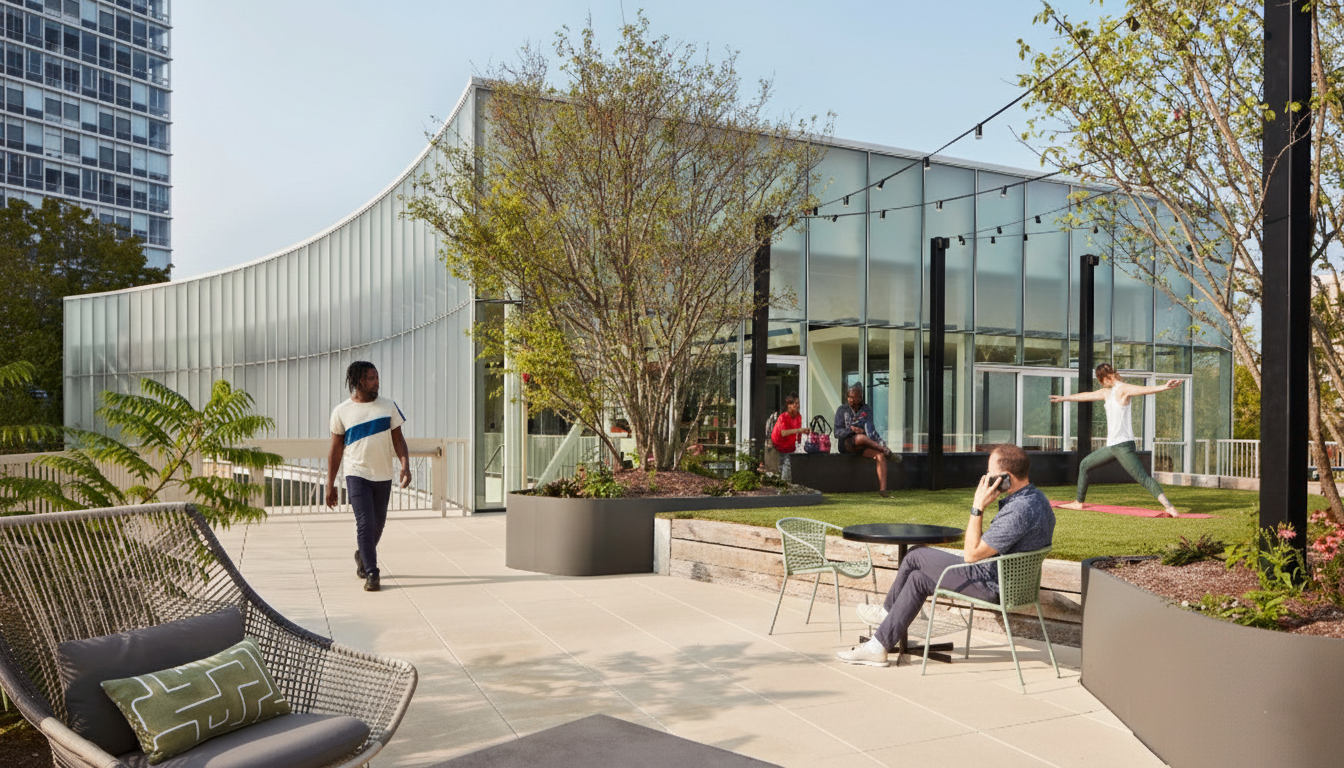
- Social Wellness: Designing “third spaces”—communal kitchens, shared workspaces, and central event lawns—to combat isolation and foster community connection.
- Financial Wellness: Incorporating attainable housing models, co-living, and building with reduced long-term maintenance/utility costs to address the affordability crisis.
- Neurodiversity: Creating workspaces and residential areas with varied sensory profiles (e.g., quiet zones, adjustable lighting) to support neurodivergent individuals.
The Strategic Investment Case: Benefits and Advantages
For investors and developers, wellness real estate offers a pathway to future-proof their portfolios against obsolescence and cyclical market changes.
1. Enhanced ROI and Financial Stability
The measurable increase in property value (10-25% residential premium) translates directly into greater profitability. Additionally:
- Higher Retention: Health-conscious tenants are highly loyal, leading to lower turnover and higher tenant satisfaction, which stabilizes cash flow.
- Faster Sales Cycle: Projects with wellness certification often report significantly faster sales velocities compared to conventional projects.
2. Alignment with ESG Goals
The sector is a natural fit for Environmental, Social, and Governance (ESG) criteria. Wellness buildings inherently promote the “S” (Social) by prioritizing human health and are often dual-certified with the “E” (Environmental) standards like LEED, attracting institutional capital focused on sustainable and ethical investments.
3. Future-Proofing Assets
Wellness is rapidly moving from an optional amenity to a standard expectation. Investing in new wellness-certified developments or repositioning older assets with verifiable wellness upgrades is crucial to ensure long-term asset value retention and market relevance, mitigating the risk of future obsolescence.
Real-World Examples & Global Case Studies
The proof of concept for WRE is strong, demonstrated by high-performing projects globally.
Case Study: Dubai and the MENA Region
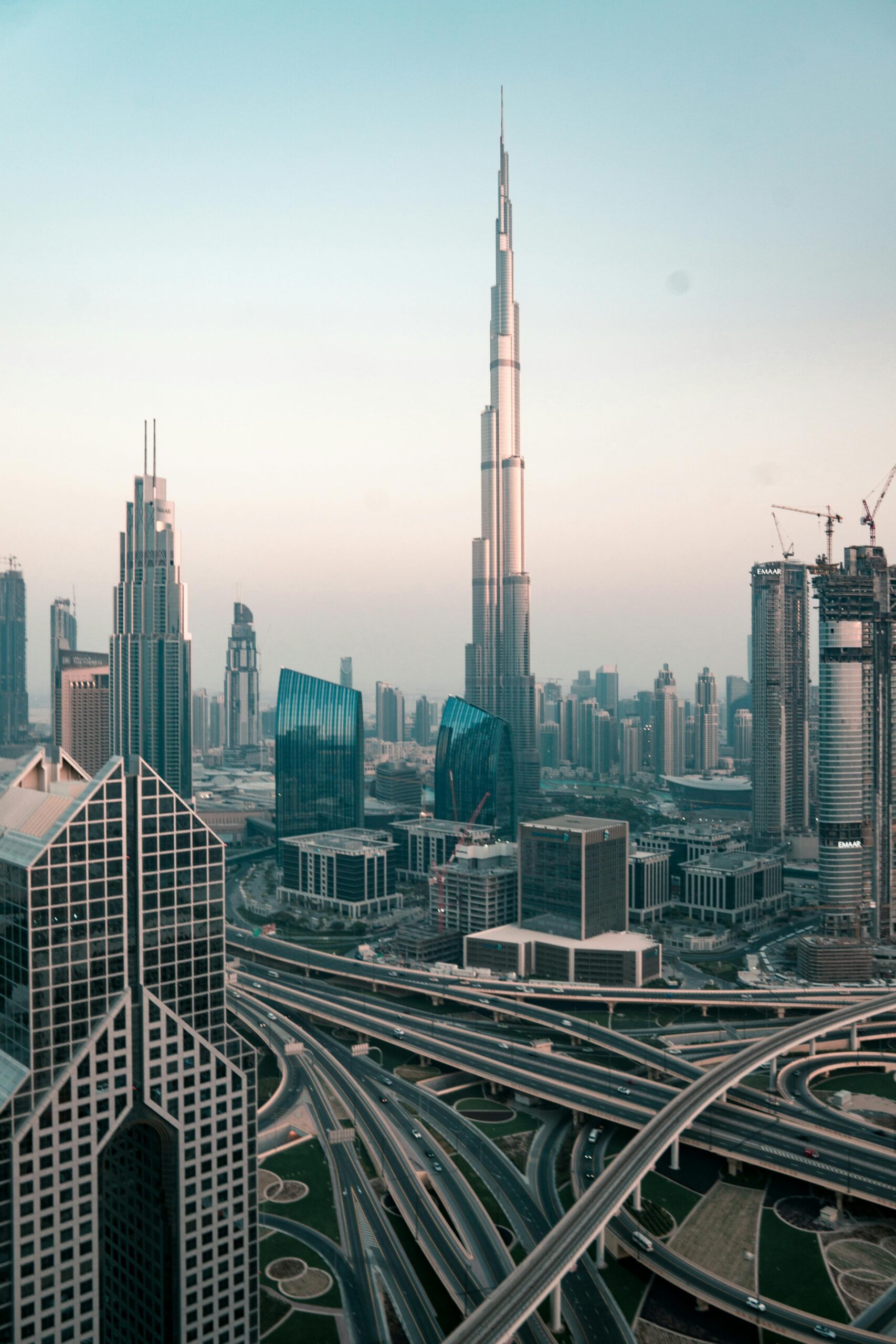
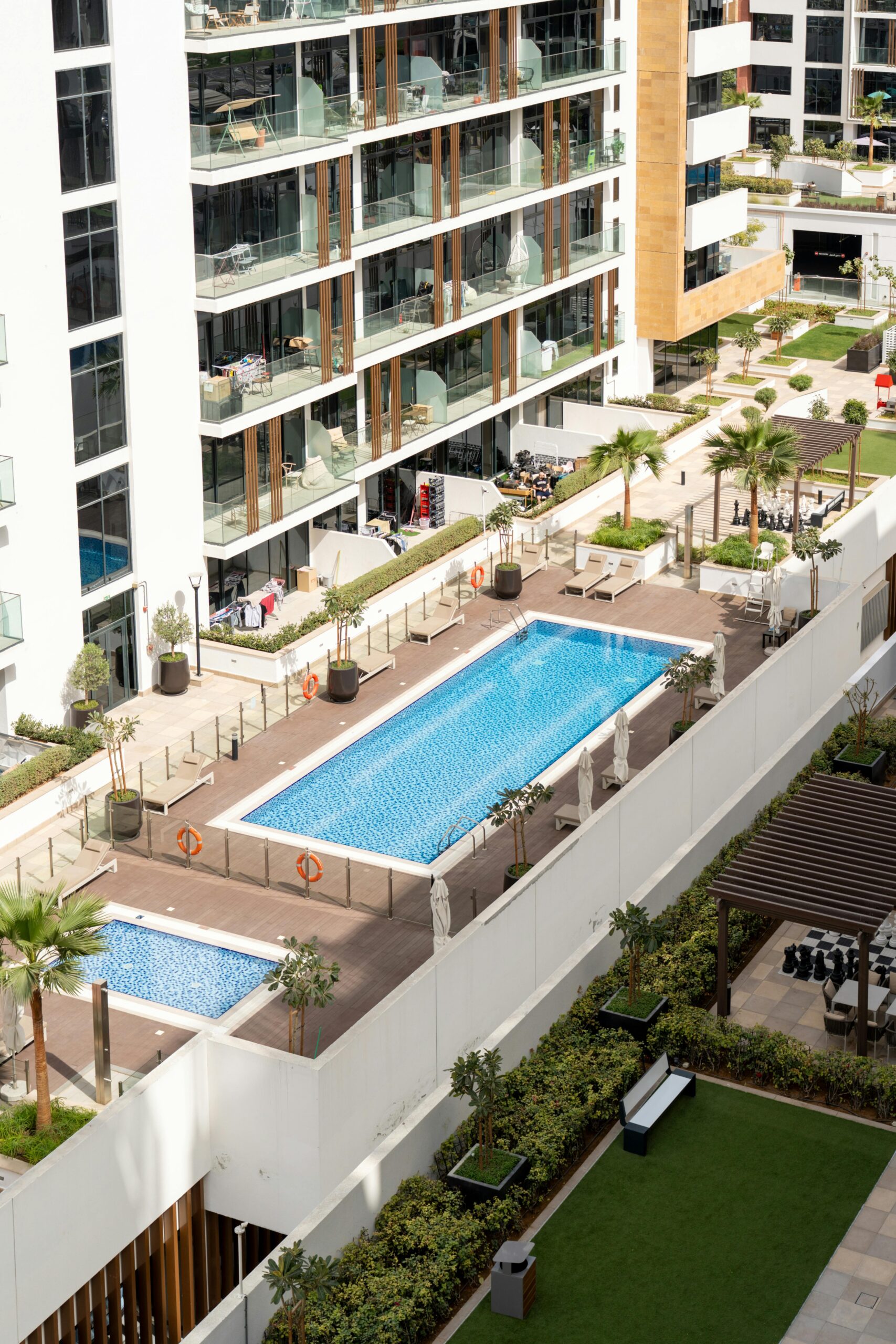
The Middle East-North Africa (MENA) region has the fastest annual growth rate globally for WRE (approx. 22.6%). Developers in Dubai and Saudi Arabia are making massive investments in large-scale urban wellness projects that include offices, housing, and retail, setting a new benchmark for luxury and health-integrated urban planning.
Case Study: Affordable Wellness (Rockaway Village, New York, USA)
Wellness is democratizing. Affordable housing communities like Rockaway Village are embedding wellness principles, not through spa amenities, but through comprehensive on-site social services (e.g., job placement, college counseling) and design that prioritizes safety, mental health, and community connection. This proves that health-supportive design is viable at every price point.
Case Study: Commercial Performance
WELL-certified office buildings in major hubs have reported up to 30% higher occupancy rates and significantly reduced employee sick days, demonstrating the clear link between built environment quality and corporate performance metrics.
Challenges & Strategic Considerations for Investors
To successfully capitalize on this market, investors must strategically navigate potential hurdles.
1. Managing the Upfront Cost
The complex systems and high-quality materials required for deep wellness often increase initial construction costs by 10% to 20%.
- Pro Tip: Developers must focus on features with the highest measurable impact (air, water, light) and justify the cost by rigorously communicating the ROI in human health, which includes reduced stress, improved sleep, and potential long-term healthcare savings for the occupant.
2. Avoiding “Wellness Washing”
The biggest market risk is superficial labeling—adding a few luxury health amenities without the foundational infrastructure (air filtration, acoustic design).
- Investor Tip: Insist on verifiable third-party certifications like the WELL Building Standard or Fitwel. These provide an evidence-based, quantifiable framework for health outcomes, separating authentic wellness projects from simple marketing hype.
3. Operational Complexity
Maintaining advanced filtration, lighting, and community programs requires specialized management.
- Actionable Step: Budget for and hire specialized property management and wellness programming staff from the outset to ensure the promised quality of life is delivered consistently, protecting the long-term premium of the asset.
Conclusion: Investing in Health is the Ultimate Hedge
The Wellness Real Estate Market is not just a trend; it is the inevitable next phase of property development. Driven by a global consumer awakening, this sector offers powerful financial incentives, including the substantial Wellness Premium, and a pathway to secure assets against obsolescence. Investors who recognize that human health is the ultimate economic asset—the wellspring of productivity and prosperity—are those best positioned to succeed. By building for well-being, we are not only generating superior returns but are also building a more resilient future.