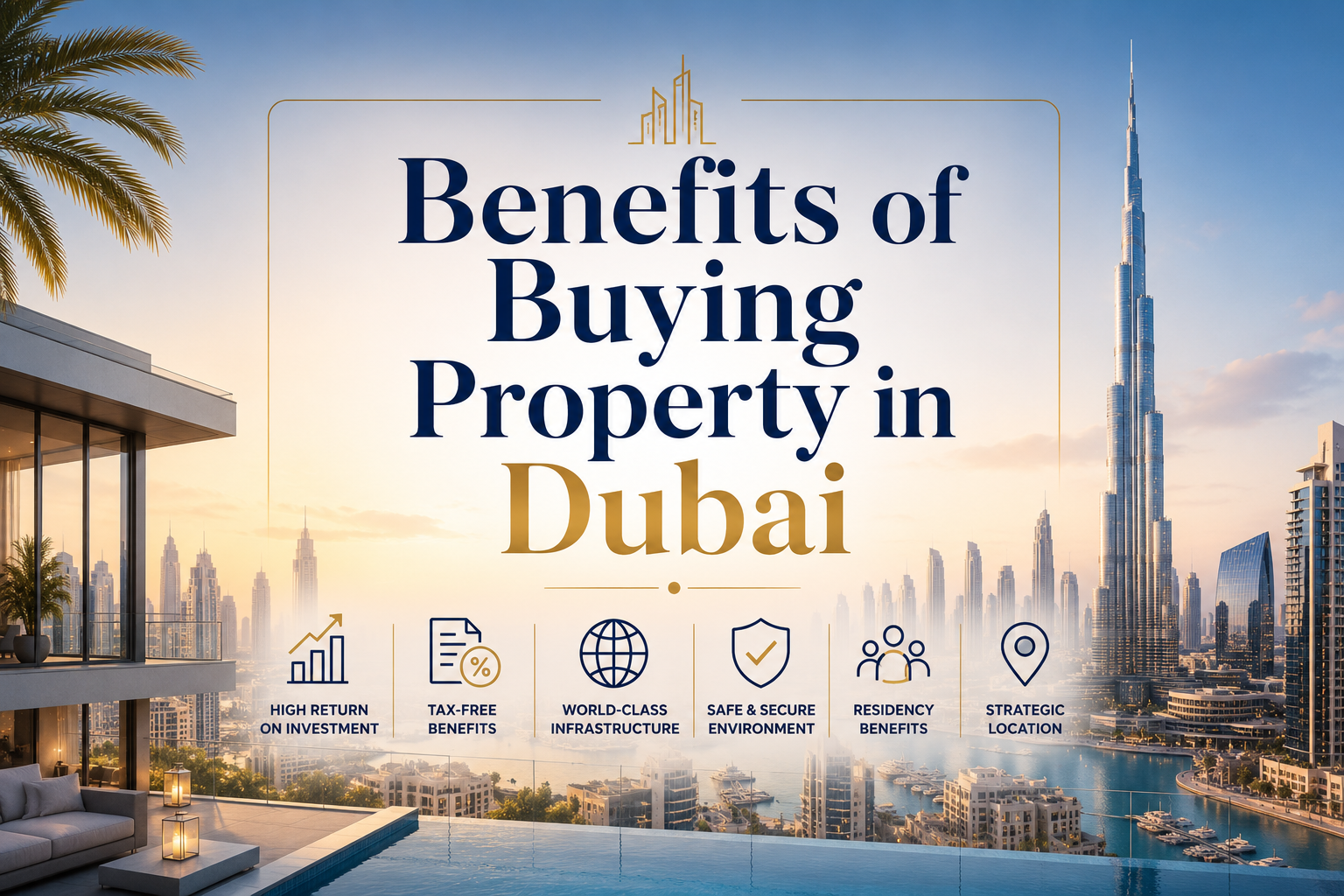
Most people ask the wrong question first. They ask whether Dubai property is a good investment, when the real question is whether it fits their specific goals. Here’s what nobody tells you. The benefits of buying property in Dubai looks completely different for a rental income investor than it does for a family planning to relocate permanently.
This guide breaks down every real advantage, backed by 2026 data, not recycled marketing lines. You will also get an honest look at the risks, because a guide that only sells you the upside is not actually helping you decide anything.
A Quick Snapshot of Dubai’s Property Market in 2026
Dubai’s real estate sector runs on genuine demand these days, not the speculation that defined the early 2000s boom and bust cycle. That shift matters more than most buyers realize, and it shapes every benefit of buying property in Dubai discussed in this guide.
The city operates under its D33 Economic Agenda, a plan to double the size of the economy by 2033 through more than 100 targeted projects across infrastructure and foreign investment. That kind of long-term government backing tends to steady a property market rather than let it swing wildly.
Is now a good time to buy property in Dubai in 2026? Most market analysts describe the current phase as mature growth, not a bubble. Price per square foot rose roughly 13% in 2025 alone, and transaction volumes hit record levels the same year. Growth has slowed from the aggressive pace of 2022, but slower growth built on real demand tends to last longer than rapid growth built on hype.
Zero Income Tax and Zero Capital Gains Tax
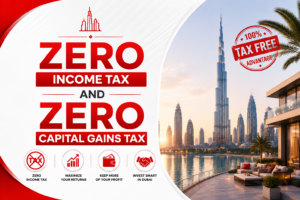
Here is the part most articles bury under vague language. Dubai charges no personal income tax on rental earnings and no capital gains tax when you sell. That is not a marketing exaggeration, it is simply how the tax code works for individual property owners.
What This Means for Real Returns
Picture an investor earning AED 120,000 a year in rental income. In the UK or the US, a chunk of that disappears to tax before it ever reaches their bank account. In Dubai, the full amount stays theirs. Over a ten-year hold, that compounding difference adds up to real money, not a rounding error.
The UAE does apply a 9% corporate tax on business profits above AED 375,000, but that rule targets companies, not individuals holding property in their own name. For most homebuyers and personal investors, this distinction rarely applies.
High Rental Yields Compared to Global Markets
Rental yield is where Dubai genuinely outperforms most competing global cities, and the gap is not small.
Average Rental Yields in Dubai (2026 Data)
As of mid-2026, Dubai’s citywide average gross rental yield sits around 6.68 to 6.76%, according to Property Monitor data. Apartments lead the pack at roughly 7.15%, while villas and townhouses trail slightly at 4.98%. Compare that to prime London at 2 to 4%, or New York and Singapore both hovering around 2 to 3%, and the difference speaks for itself.
Which Areas and Property Types Deliver the Best Yields?
Budget-friendly communities post the strongest numbers. International City, Dubai Silicon Oasis, and Dubai South regularly deliver gross yields between 8% and 9%. Jumeirah Village Circle balances yield and stability well, typically landing between 7% and 9% gross. Studios and one-bedroom units generally outperform larger layouts on a per-square-foot basis, since smaller units attract the deepest pool of tenants.
Strong Capital Appreciation and Competitive Property Prices
Property values in Dubai are climbing on the back of real population growth, not speculative flipping. That distinction matters when you are deciding whether to trust the trend.
Average Price Per Square Foot Comparison (Global Cities)
Despite its luxury reputation, Dubai remains genuinely affordable compared to other major global cities.
| City | Average Price Per Sq Ft (USD) |
| Hong Kong | $2,457 |
| Singapore | $2,299 |
| London | $1,775 |
| New York | $1,728 |
| Paris | $1,390 |
| Sydney | $1,136 |
| Tokyo | $992 |
| Dubai | $673 |
That is not a small gap. Dubai sits at roughly a quarter of Hong Kong’s price per square foot, while offering comparable, sometimes superior, infrastructure and lifestyle amenities.
Off-Plan vs Ready — Where Is Growth Happening?
Off-plan properties currently carry a median price around AED 1,820 per square foot, a 27% premium over ready properties at roughly AED 1,430. That premium exists because off-plan buyers often capture appreciation before the building is even finished, sometimes seeing gains of 20 to 40% between purchase and handover in high-demand projects. Ready properties trade that early upside for immediate rental income and more predictable, steady growth.
The UAE Golden Visa — Residency Through Property Investment
Real estate here does more than generate returns. It can buy you a real, long-term life in the country.
Property Investment Threshold (2026 Rules)
The core rule has stayed consistent, a property valued at AED 2 million or above qualifies you for the 10-year renewable Golden Visa. What changed in 2026 is the flexibility around that threshold. Mortgaged and off-plan properties now qualify, as long as the certified or paid-up value reaches AED 2 million, and multiple properties can be combined to hit that number.
How long can you stay in Dubai if you own a property that qualifies? There is no minimum stay requirement attached to the Golden Visa, and it covers your spouse, children, and in some cases your parents too. That flexibility alone has pulled in serious capital. The UAE recorded a net inflow of 9,800 millionaires in 2025, the highest of any country worldwide, according to Henley & Partners’ Private Wealth Migration Report.
A Booming Economy with a Growing, Safe Population
Dubai’s population passed 4 million residents in late 2025, and the city’s own 2040 Urban Master Plan targets 5.8 million long-term. That kind of sustained growth keeps housing demand strong across both sales and rental markets, regardless of short-term market noise.
Safety plays a real role here too, one investors sometimes underweight. Dubai consistently ranks among the safest major cities globally, with an efficient legal system that gives both residents and international buyers genuine confidence in their investment.
World-Class Infrastructure and Quality of Life
Property values do not exist in a vacuum. They track the quality of the roads, schools, hospitals, and transport around them, and Dubai invests heavily on all four fronts.
Two international airports, an expanding Metro network, internationally accredited hospitals, and school curricula spanning British, American, and IB systems all support strong, sustained tenant demand. Skilled professionals relocating to the city want infrastructure that actually works, and they are willing to pay premium rents in neighborhoods that deliver it.
A Transparent, Well-Regulated Market
Legal risk is the single biggest fear international buyers raise before purchasing property abroad. Dubai’s regulatory framework addresses that fear directly, and it is worth understanding exactly how.
Every transaction registers through the Dubai Land Department, creating an auditable ownership record tied to your property title deed. Off-plan developments operate under mandatory escrow account rules, meaning your payments fund actual construction rather than sitting in a developer’s general account. Service charges run through the Mollak system for added transparency, and off-plan contracts register through Oqood, giving buyers enforceable rights from the moment they sign. RERA licenses every broker and agency operating in the market, with real penalties for non-compliance.
Buying Property in Dubai on Installments — Flexible Financing and Payment Plans
Few global property markets offer the payment flexibility Dubai does, and this genuinely changes who can realistically enter the market.
Mortgage Access for International Buyers
UAE banks lend to non-resident foreign investors, not just citizens and residents. Expect a minimum down payment around 25% for expats, slightly lower at 20% for UAE nationals, with interest rates generally running 3 to 5% depending on your lender and profile. Loan terms can stretch up to 25 years for qualifying borrowers, giving buyers another way to buy property in Dubai on installments beyond a developer plan.
Buying property in Dubai on installments through a developer works differently from a bank mortgage entirely. Common structures include 50/50 plans, split evenly between construction and handover, 60/40 plans that push more payment past handover, and post-handover plans stretching payments 5 to 7 years beyond completion. These structures let investors generate rental income while still paying down the purchase, a genuine advantage few other markets offer at this scale.
How Does the Off-Plan Property Buying Process Work in Dubai?
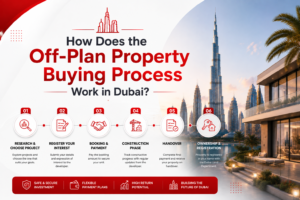
Knowing the buying off plan property in Dubai process upfront prevents most of the confusion first-time buyers run into. It follows a defined legal sequence from reservation to title deed.
Start by confirming the developer’s RERA registration and reviewing their delivery track record on past projects. Sign a reservation form and pay an initial deposit, typically 10 to 20% of the total price. Your payments then register under Oqood, an interim title system that protects your ownership rights before the building exists. As construction progresses, you pay according to your chosen plan, with the remaining balance due at handover when Oqood converts into a full title deed through DLD.
Should You Buy Luxury Property in Dubai?
Luxury property here is not just an image play anymore, it is backed by real transaction data. Dubai recorded 500 home sales above USD 10 million in 2025 alone, worth a combined USD 9.05 billion, according to Knight Frank. That level of activity signals genuine depth of capital, not a handful of speculative purchases.
If you want a luxury property in Dubai purely for lifestyle, areas like Palm Jumeirah and Downtown Dubai deliver unmatched prestige and amenities. If your goal is investment return, premium areas typically yield a lower 5 to 6% compared to mid-market communities, trading yield for stronger long-term capital preservation and resale liquidity.
Strategic Location and a Thriving Tourism Industry
Dubai sits almost exactly between Europe, Asia, and Africa, a position that keeps it relevant as a global business hub regardless of which region drives growth in any given year.
Tourism reinforces that strength directly. Dubai welcomed 19.59 million international overnight visitors in 2025, a 5% increase year on year and a third consecutive record-breaking year. That volume drives strong, consistent demand for short-term rental properties, giving holiday-home investors a genuinely active market to tap into.
What Are the Risks of Buying Property in Dubai?
No serious investment guide should skip this section, and yet plenty do. Buying property in Dubai carries real risks alongside the upside.
Off-plan construction delays happen, even with reputable developers. Always check a developer’s delivery history before committing. Market cyclicality is real too, prices can correct after strong growth periods, though established, high-demand areas tend to weather corrections better than emerging ones. Currency exposure matters for investors earning outside AED or USD, since the dirham’s peg to the dollar means your returns still shift with exchange rates back home. Property is also an illiquid asset, selling can take weeks or months, so factor that into your broader financial planning before you buy.
Best Areas to Invest in Dubai Real Estate
Several communities consistently attract strong investor attention. Downtown Dubai and Dubai Marina lead on prestige and rental demand. Palm Jumeirah remains the benchmark for waterfront luxury. Jumeirah Village Circle and Business Bay offer a stronger balance between entry price and yield. Dubai Hills Estate rounds out the list for buyers prioritizing family-friendly amenities alongside long-term appreciation.
How Aims Across Can Help You Start Your Dubai Property Journey
Understanding rental yields, Golden Visa thresholds, and payment plans is one thing. Finding the right property that actually matches your specific goals is another. Aims Across works with verified listings across Dubai’s strongest performing communities, from off-plan launches to ready properties.
Our team can walk you through financing options, current market data, and which areas genuinely fit your investment goals. Reach out to Aims Across today to start your Dubai property search with real, current information behind you.
Final Thoughts
Buying property in Dubai in 2026 comes down to a genuinely rare combination, zero property tax, rental yields well above global averages, and a regulatory framework that protects buyers at every step. Whether the goal is rental income, long-term capital growth, or Golden Visa residency, the data backs up the opportunity better than any sales pitch could. The risks are real too, off-plan delays, market cycles, and currency exposure deserve honest consideration before you commit. For buyers who do their homework, Dubai remains one of the more compelling property markets in the world right now.
Frequently Asked Questions
Is it a good idea to buy property in Dubai?
For most buyers, yes, given zero property tax, strong rental yields, and Golden Visa eligibility. The right decision still depends on your specific budget, timeline, and investment goals.
What are the benefits of buying an apartment in Dubai for investment purposes?
Apartments typically deliver Dubai’s highest rental yields, around 7.15% on average, alongside lower entry prices than villas and strong demand from the city’s growing professional population.
What is the average cost of buying property in Dubai beyond the purchase price?
Budget an additional 6 to 7% on top of the purchase price, covering the 4% DLD transfer fee, a trustee office fee of roughly AED 4,000, and standard agency commission.
Can I get a mortgage in Dubai as a foreigner?
Yes. UAE banks offer mortgages to non-resident foreign buyers, typically requiring a 25% down payment and offering interest rates between 3 and 5%.
What is the difference between off-plan and ready property in Dubai?
Off-plan property is purchased before or during construction at lower entry prices with developer payment plans. Ready property is complete and available for immediate occupancy or rental income.