Dubai real estate offers investors zero income tax, zero capital gains tax, and gross rental yields between 6% and 9%. Add freehold ownership for foreigners, steady price appreciation, and a Golden Visa tied to property, and you get one of the strongest income markets on earth right now.
In Q1 2026 alone, the Dubai Land Department recorded AED 252 billion in transactions across more than 60,000 deals. That is a 31% jump from the same quarter last year. Something structural is happening here, not a short-term spike.
This guide breaks down exactly why investors keep choosing Dubai, where the real yield lives, how to invest step by step, and what nobody puts in the glossy brochure. No hype. Just the numbers, the process, and the honest tradeoffs.
Is Real Estate a Good Investment in Dubai? (Quick Snapshot)
Dubai real estate remains attractive for investors seeking rental income, long-term growth, and flexible ownership options. Here’s a quick look at what makes the market stand out in 2026.
- Zero personal income tax and zero capital gains tax on property
- Average gross rental yields of 6% to 9%, well above London, New York, or Singapore
- Full freehold ownership for foreign buyers in designated areas
- A 10-year Golden Visa available through AED 2 million in property
- Record transaction volumes for three straight years running
- A transparent, government-regulated buying process through the Dubai Land Department
Rental demand keeps climbing because more than 80% of Dubai’s population is expatriate, and most of them rent before they buy. That single fact drives everything else in this article.
Top Reasons to Invest in Dubai Real Estate in 2026
Dubai offers several advantages for property investors, from strong rental demand to investor-friendly ownership rules. Here are the top reasons to invest in Dubai real estate in 2026.
1. Tax-Free Environment (No Income or Capital Gains Tax)
Here’s what nobody tells you upfront: the “no tax” pitch sounds like marketing, but it holds up under scrutiny. There is no personal income tax on rental earnings. There is no capital gains tax when you sell. Compare that to London, where rental income is taxed on a sliding scale, or New York, where state and federal capital gains can eat 20% or more of your profit. In Dubai, the number you see on the lease is close to the number you keep.
2. High Rental Yield and Strong Rental Income
Rental yield is the annual rent divided by the purchase price. It tells you how hard your money works every year, separate from any price growth.
Gross Rental Yield vs Net Rental Yield: What’s the Difference?
Gross yield ignores costs. Net yield subtracts service charges, management fees, and vacancy periods. A 9% gross yield in a mid-market building often settles closer to 5.5% to 6.5% net once real costs are applied. Always ask for the net number before you buy. The gross figure is the one agents lead with, and it is rarely the one you bank.
Average Rental Yields by Property Type (2026)
| Property Type | Gross Yield Range | Typical Net Yield |
| Studio and 1-bed apartments (mid-market) | 7% to 9.5% | 5.5% to 6.5% |
| 2 and 3-bed apartments (prime) | 4% to 6% | 3% to 4.8% |
| Villas | 4.5% to 7.2% | 3.5% to 5.5% |
Source: DLD Rental Index, Property Finder, CBRE Q1 2026 data.
3. Consistent Capital Appreciation
Beyond rental income, property price appreciation has been steady across most communities since 2022. Villas in prime areas like Dubai Hills Estate and Arabian Ranches gained 35% to 55% in value over that stretch, based on DLD transaction data. Apartments moved slower but still climbed in most established communities. Nobody can promise future appreciation. But the transaction data shows a market that has been rewarding patient holders.
4. Freehold Ownership for Foreign Investors
This is the detail that surprises first-time buyers. In designated freehold areas, a foreign investor owns the property outright, not on a long lease, not through a local partner. Downtown Dubai, Dubai Marina, Business Bay, JVC, and Palm Jumeirah all sit inside these zones. Your name goes on the title deed. Full stop.
5. A Booming, Diversified Economy
Dubai stopped depending on oil decades ago. Tourism, logistics, finance, tech, and trade now drive growth. That diversification matters for real estate because it spreads risk across sectors instead of tying rental demand to a single industry’s health.
6. Growing Population and Housing Demand
Dubai’s population keeps expanding as professionals relocate for work, tax advantages, and lifestyle. More residents means more renters. More renters means occupancy stays high in well-located buildings. This is the quiet engine behind every yield number in this article.
How Much Money Do I Need to Invest in Real Estate in Dubai?
You can enter the market with a studio priced around AED 400,000 to 500,000 in communities like International City or Dubai Investments Park. Mid-market one-bedroom units in JVC or Business Bay typically start near AED 700,000 to 900,000. If your goal includes the 10-year Golden Visa, budget at least AED 2 million based on the Dubai Land Department’s official valuation, not your down payment.
7. Thriving Tourism Industry
Dubai welcomes more than 17 million visitors a year. That fuels short-term rental demand, hotel-adjacent apartment communities, and a steady stream of relocation-ready tenants who fall in love with the city on vacation and come back to rent.
8. Competitive Property Prices (Global Comparison)
Price per Square Foot: Dubai vs London vs New York vs Singapore
| City | Average Price per Sq Ft (Prime Areas) |
| Dubai | AED 1,500 to AED 3,500 |
| London (central) | AED 10,000 to AED 20,000 |
| Singapore (core) | AED 8,000 to AED 15,000 |
| New York (Manhattan) | Comparable to or above London prime pricing |
Even Dubai’s most expensive addresses, Palm Jumeirah and Downtown, sit well below what buyers pay for far less space in Kensington, Manhattan, or central Singapore. The same budget simply buys more square footage here.
9. Transparent, Regulated Market
Every transaction runs through the Dubai Land Department and is overseen by the Real Estate Regulatory Agency, known as RERA. Off-plan payments sit in escrow accounts controlled by the regulator, not the developer. That structure exists because Dubai learned hard lessons after 2008, when unregulated off-plan sales collapsed and buyers lost deposits with no recourse. The rules today are stricter because of that history, not despite it.
10. Golden Visa and Residency Options
Buy property worth AED 2 million or more, based on DLD valuation, and you qualify for a renewable 10-year Golden Visa. A February 2026 rule change removed the old requirement to pay 50% upfront in cash, so mortgaged and off-plan purchases now count toward the threshold too. A smaller AED 750,000 investment qualifies for a 2-year residency instead.
What Should I Know Before Buying an Investment Property in Dubai?
Verify the developer’s RERA registration before signing anything. Confirm the project has an active escrow account. Calculate net yield, not gross, using real service charge figures for that specific building. Budget 7% to 10% above the purchase price for closing costs, agency fees, and registration. And never wire a deposit before your lawyer or agent confirms the title is clean.
11. Strategic Global Location
Dubai sits within an eight-hour flight of two-thirds of the world’s population. For investors thinking about tenant demand from Europe, Africa, South Asia, and the wider Gulf, that geography is not a footnote. It is the reason so many multinational tenants land here first.
12. Flexible Payment Plans
Off-plan developers routinely offer payment plans that stretch 60% or more of the price across construction, with the balance due on handover. Ready property purchases move faster but require fuller payment upfront. Both paths work. Which one fits depends on your cash flow and your appetite for construction-period risk.
13. World-Class Infrastructure
Dubai’s roads, metro, airports, and utilities were largely built in the last two decades. That means fewer legacy problems and more capacity for growth compared to older global cities still retrofitting Victorian-era infrastructure.
14. Innovative, Sustainable Developments
Newer master plans increasingly build in solar-ready design, green space, and smart-home infrastructure as standard, not as a premium add-on. That shift is reshaping what “mid-market” even means in this city.
Benefits of Investing in Dubai Real Estate: Pros and Cons
Dubai real estate offers attractive opportunities, but every investment comes with potential risks. Understanding both the benefits and challenges can help you make a more informed decision.
Key Benefits (Summary)
Strong net investment returns, zero recurring property tax, high liquidity in popular communities, and a straightforward path to residency all combine to make Dubai one of the more efficient places to park investment capital today.
Risks and Challenges to Consider
Service charges vary widely by building and can quietly erode net yield if you do not check them before buying. Off-plan projects sometimes face delivery delays, even with reputable developers. Market cycles exist here too. Prices do not rise in a straight line forever, and buyers who over-leverage into a downturn can face real stress. Treat every yield projection as an estimate, not a guarantee.
Best Real Estate Investment in Dubai: Top Areas to Consider
Choosing the right area can make a big difference in rental income and long-term returns. Dubai offers investment options for different budgets, goals, and property preferences.
Downtown Dubai
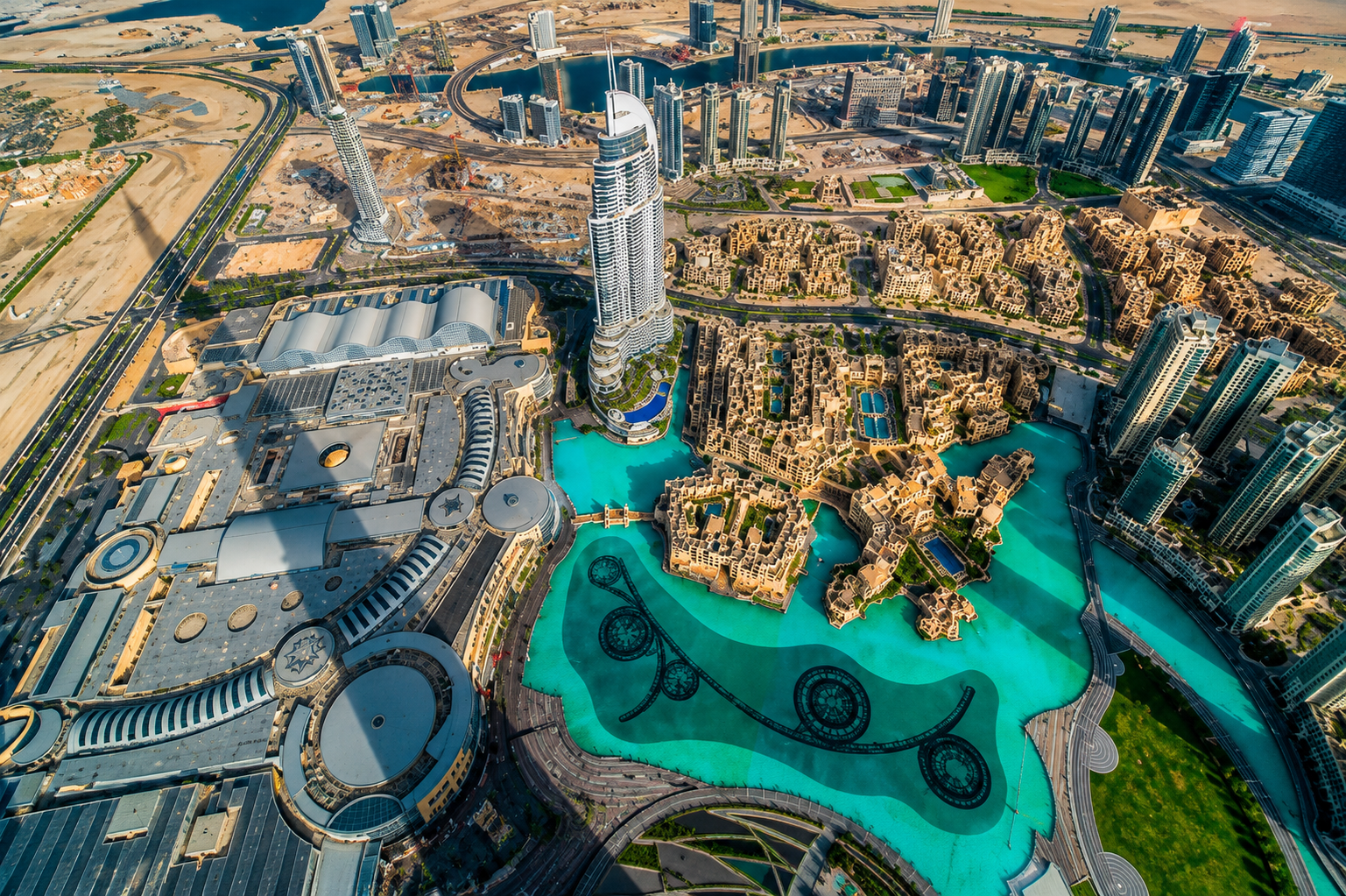
Home to the Burj Khalifa. Average price around AED 2,868 to 3,825 per sq ft. Gross yields of 4% to 6%. Best for investors prioritizing capital appreciation and prestige over maximum yield.
Dubai Marina
A waterfront lifestyle hub with strong short-term rental demand. Gross yields around 5.5% to 7.2%. Best for investors who want liquidity and consistent tenant interest.
Business Bay
Central, commercial-adjacent, and popular with young professionals. Gross yields around 5.5% to 7.6%. Best for balanced income and appreciation.
Jumeirah Village Circle (JVC)
The city’s most talked-about mid-market yield play. Gross yields commonly run 7% to 9.5%. Best for investors prioritizing cash flow.
Palm Jumeirah
The trophy address. Villa yields around 4.5% to 5.5%, appreciation historically strong. Best for long-term wealth preservation, not headline yield.
Dubai Hills Estate
A master-planned community with golf course frontage and family appeal. Gross yields around 6% to 7%. Best for investors wanting a mix of lifestyle demand and steady growth.
How to Invest in Dubai Real Estate: Step-by-Step Guide
- Define your budget and goal. Decide if you want yield, appreciation, or Golden Visa eligibility first.
- Choose ready property or off-plan. Ready units in the secondary market generate rent immediately. Off-plan units on the primary market often cost less upfront but carry construction risk.
- Verify the project and developer. Use the Dubai REST app to confirm RERA registration and escrow status before you commit a single dirham.
- Reserve the unit and sign the Sale and Purchase Agreement. This locks in your price and terms.
- Complete Oqood registration for off-plan purchases. This registers your interest with the Dubai Land Department while the project is under construction.
- Pay the DLD transfer fee and register the property. The standard fee is 4% of the purchase price, plus smaller administrative charges.
- Receive your Property Title Deed. This is your legal proof of ownership.
Can Foreigners Buy Property in Dubai?
Yes. Foreigners can buy full freehold property in designated freehold areas, with complete ownership rights and no local sponsor required.
How to Choose the Right Real Estate Company or Developer in Dubai
Check RERA registration first, without exception. Confirm the developer uses a regulated escrow account for off-plan funds. Look at their actual delivery track record, not their marketing materials. Ask how many past projects were delivered on time and how many were delayed. A developer who answers that question honestly is usually one worth trusting.
The Future of Dubai Real Estate Market (2026 and Beyond)
The Dubai 2040 Urban Master Plan targets a population of roughly 5.8 million and allocates significant land toward green space, public transport corridors, and new residential districts. The D33 economic agenda aims to double the size of Dubai’s economy by 2033. Both plans point toward sustained housing demand rather than a short-term boom. Off-plan sales already account for around 70% of transaction volume in 2026, which tells you where developer confidence and buyer appetite currently sit.
Final Thoughts
Dubai offers a rare combination: no income or capital gains tax, gross yields well above most global cities, full freehold ownership for foreigners, and a regulated buying process backed by the Dubai Land Department. The market carries real risks too, from service charge surprises to off-plan delays, and no honest advisor will tell you otherwise.
If you understand the numbers, verify the developer, and calculate net yield before you sign anything, Dubai remains one of the more compelling real estate markets available to global investors right now. Start with one property, learn the process, and build from there.
Frequently Asked Questions
Is Dubai real estate a good investment in 2026?
Yes, based on current data. Record transaction volumes, yields of 6% to 9%, and zero property tax make it one of the stronger income-generating markets globally, though individual results depend on location and building.
Do foreigners pay tax on Dubai property?
No personal income tax applies to rental income, and no capital gains tax applies when you sell. The main cost is the one-time 4% DLD transfer fee at purchase.
What is the average rental yield in Dubai?
Gross yields typically range from 6% to 9%, with mid-market apartments in areas like JVC often outperforming luxury addresses like Downtown.
Is the Dubai property market a bubble?
Most current data points to fundamentals-driven growth tied to population increase and economic diversification, not speculative excess. Still, no market moves in a straight line, and buyers should underwrite conservatively.
What is the difference between off-plan and ready property?
Off-plan property is purchased before or during construction, usually with a phased payment plan. Ready property is complete and can generate rental income immediately after purchase.